Vertical vs Horizontal Clutch Chronograph: Differences, Pros, Cons & Which You Should Choose
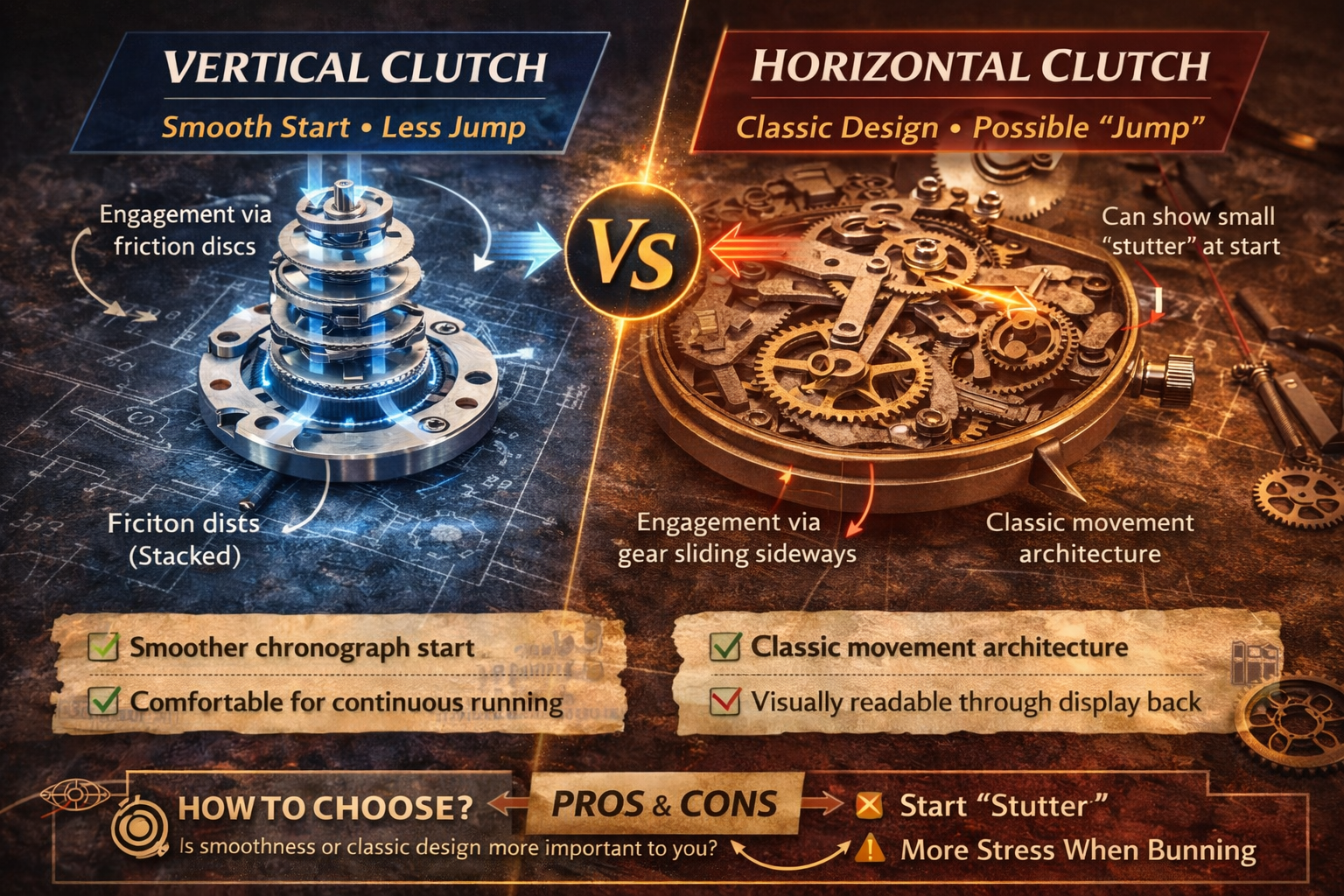 If you’re shopping chronographs or comparing movements, you’ll often see vertical clutch and horizontal clutch mentioned as a big deal. They’re two different ways to connect the chronograph timing train to the running movement—and they can affect how the chronograph feels, how it starts, and how it behaves when left running.
If you need a quick chronograph refresher first, start here:
Chronograph Explained: What It Is, How It Works, and Common Mistakes to Avoid
Quick Answer
-
Horizontal clutch: a gear slides sideways to engage the chronograph. Classic design; can show a small “start jump” and may not love being left running constantly (movement-dependent).
-
Vertical clutch: engagement is done via stacked friction discs (like a tiny clutch pack). Often smoother starts and generally friendlier to leaving the chronograph running.
Neither is “always better”—it depends on what you care about.
How a Chronograph Clutch Works (Simple)
A chronograph has to do one core task: connect/disconnect the chronograph seconds mechanism to the movement.
-
When you press Start, the clutch engages.
-
When you press Stop, it disengages.
-
When you press Reset, hammers return hands to zero.
Movement basics if you want deeper context:
How Does an Automatic Watch Work? Simple Beginner Guide
Horizontal Clutch (Lateral Clutch): What It Is
A horizontal clutch engages by sliding a gear sideways to mesh with another gear.
Pros
-
Classic architecture (many historically important chronographs)
-
Can be beautiful to see (often visually “readable” through a display caseback)
-
Crisp mechanical feel
Cons
-
Can show a small chronograph seconds hand jump at start (“stutter”)
-
Leaving the chronograph running may create more continuous load (depends on design)
-
Engagement can be more sensitive to adjustment/tolerances
Vertical Clutch: What It Is
A vertical clutch engages by pressing friction surfaces together in a stacked arrangement. Instead of gear teeth sliding into mesh, friction coupling transfers power.
Pros
-
Often smoother start (less “jump”)
-
Typically more comfortable for running the chronograph continuously
-
Can reduce some engagement shock to the chronograph seconds hand
Cons
-
More complex/expensive to manufacture in some designs
-
Service and adjustment can be more specialized (depends on movement family)
-
Not necessarily “more accurate”—it’s about engagement behavior and wear patterns
Servicing expectations:
How Often Should You Service an Automatic Watch?
Why Does the Chronograph Seconds Hand “Jump” at Start?
That small jump is usually due to the way a horizontal clutch engages:
-
the gear teeth meet and load transfers suddenly
-
slight play/backlash in the train can show as a visible twitch
A vertical clutch often reduces this because it couples through friction rather than tooth-to-tooth meshing.
Which Is Better for Daily Use?
Choose (or prefer) vertical clutch if:
-
You like a smooth, clean start
-
You sometimes leave the chronograph running
-
You want a “daily-driver” chronograph behavior
Choose (or be happy with) horizontal clutch if:
-
You love classic chronograph architecture
-
You don’t mind a small start jump
-
You use the chronograph only when needed
Important: overall movement quality and regulation matter more than clutch alone.
Accuracy baseline:
Are Automatic Watches Accurate?
Does the Clutch Type Change Accuracy?
Not directly. But running the chronograph can change movement amplitude on some watches, which may slightly affect timekeeping.
If you notice sudden fast running, magnetism is a common culprit:
Watch Magnetism: Signs Your Watch Is Magnetized, How to Test It
Practical Usage Tips (Regardless of Clutch)
-
Don’t reset while running (stop first, then reset)
-
Avoid operating pushers underwater unless specifically designed for it
-
If pushers feel rough—don’t force them
-
Keep up with normal care and storage
Care guide:
How to Maintain an Automatic Watch: Daily Wear, Storage & Servicing
FAQ: Vertical vs Horizontal Clutch
Is vertical clutch always better?
No. It’s often better for smooth engagement and continuous running, but horizontal clutches are proven, classic, and can be excellent.
Can I leave a horizontal clutch chronograph running?
Sometimes yes, but it depends on the movement design. If you like leaving it running, vertical clutch is usually the safer preference.
What causes “chronograph stutter”?
Often gear engagement/backlash in horizontal clutch designs.
Does clutch type affect servicing cost?
It can—vertical clutches may be more complex in some calibers, but brand and parts availability matter more overall.