Telemeter Scale Explained: How to Measure Distance With a Chronograph
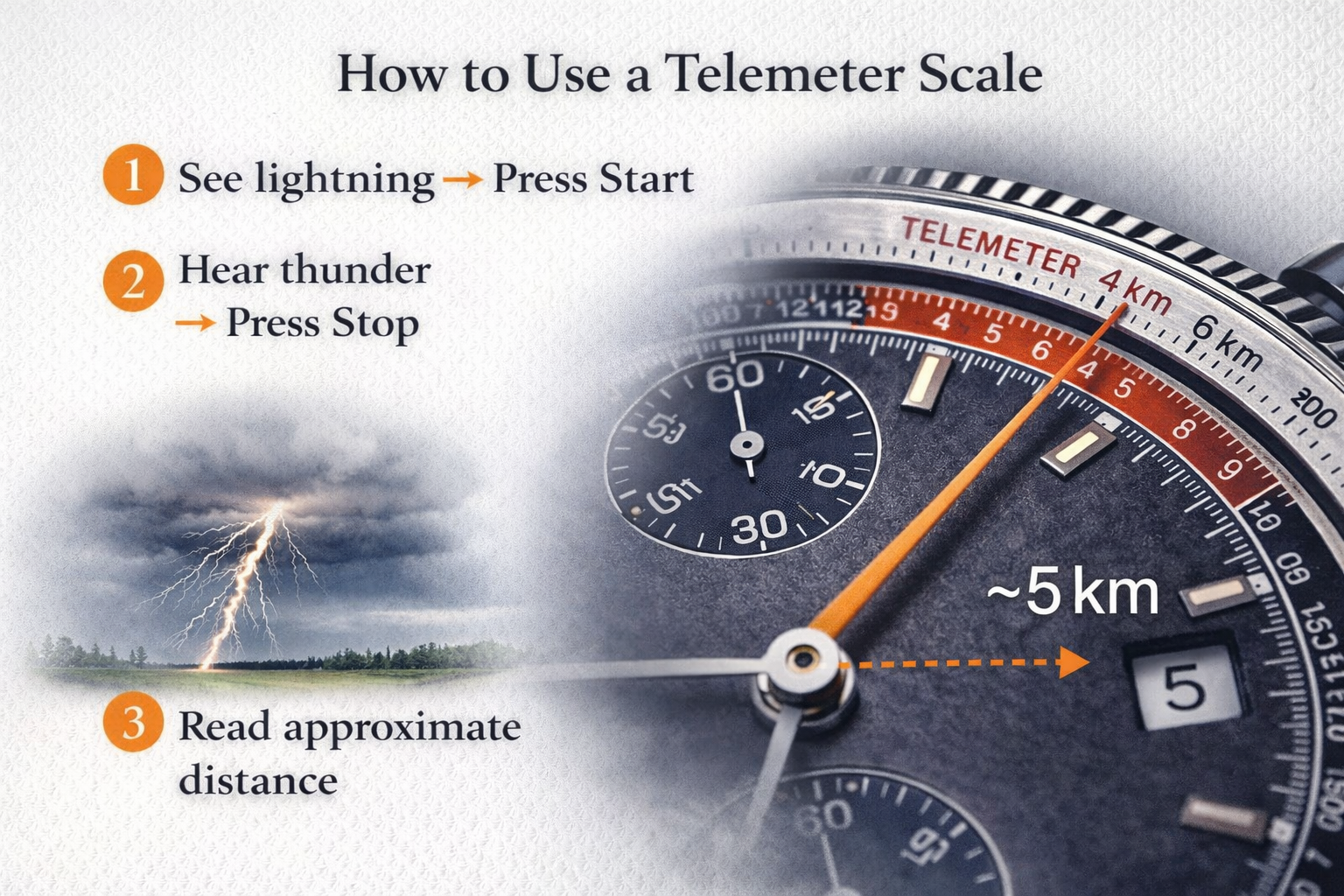 A telemeter is a chronograph scale that estimates distance based on the delay between a visible event and the sound you hear. It’s a clever, old-school tool that still works today—especially for storms (lightning) and other events where light arrives faster than sound.
If you need the chronograph foundation first, start here:
Chronograph Explained: What It Is, How It Works, and Common Mistakes to Avoid
Quick Answer
-
Start the chronograph when you see the event (light/flash).
-
Stop it when you hear the sound (thunder/explosion).
-
Read the distance on the telemeter scale where the seconds hand stops.
How a Telemeter Works (Simple Explanation)
A telemeter uses the fact that:
-
light is effectively instantaneous at everyday distances
-
sound travels much slower, so the time delay corresponds to distance
The telemeter scale is pre-calculated so that the seconds hand position maps to distance (often km or miles, depending on the watch).
Step-by-Step: Measure How Far Away Lightning Is
-
When you see the lightning flash, press Start
-
When you hear the thunder, press Stop
-
Read the telemeter value where the seconds hand stopped
That number is the approximate distance (in the scale’s units).
Tip: If your telemeter is in miles and you want km, you can convert later—but the scale itself is fixed.
Telemeter vs Tachymeter (Don’t Mix Them Up)
These two scales are often confused:
| Scale | What It Measures | What You Need |
|---|---|---|
| Telemeter | Distance via sound delay | Light + sound event |
| Tachymeter | Rate per hour (often speed) | Known distance or quantity |
Tachymeter guide :Flyback Chronograph Explained: What It Is, How It Works, and How to Use It Safely
Common Mistakes
1) Starting on the sound instead of the flash
Telemeter assumes you start timing at the visual cue.
2) Using it where sound speed assumptions break down
Wind, echoes, terrain, and temperature can change perceived timing slightly.
3) Reading the wrong scale
Some watches have multiple scales (tachymeter + telemeter). Make sure you’re reading the telemeter ring.
Does Telemeter Use Affect Accuracy or Wear?
Using the chronograph doesn’t “harm” a healthy watch, but chronographs have more parts and need sensible care.
Care routine:
How to Maintain an Automatic Watch: Daily Wear, Storage & Servicing
Service expectations:
How Often Should You Service an Automatic Watch?
Accuracy baseline:
Are Automatic Watches Accurate?
If timing suddenly goes wild (often fast), magnetism is common:
Watch Magnetism: Signs Your Watch Is Magnetized, How to Test It
Want to understand why chronographs engage differently (and why some start smoother)? Read Vertical vs Horizontal Clutch:
Column Wheel vs Cam Chronograph: Differences, Feel, Reliability & What to Choose
Curious why some chronographs have smoother pusher feel and switching? Read Column Wheel vs Cam Chronograph:
Tachymeter Explained: How It Works, How to Use It, and What the Scale Really Means
FAQ: Telemeter Scale
What does a telemeter measure?
Distance based on the delay between seeing an event and hearing it.
Is it accurate?
It’s an estimate. Environmental factors can affect sound timing slightly, but it works surprisingly well for storms.
What units does a telemeter use?
It depends on the watch—often km or miles. The scale itself tells you.
Can I use telemeter for anything?
Any event where you see something and later hear it can work (within reasonable ranges).