Pulsometer Scale Explained: How to Measure Heart Rate With a Chronograph
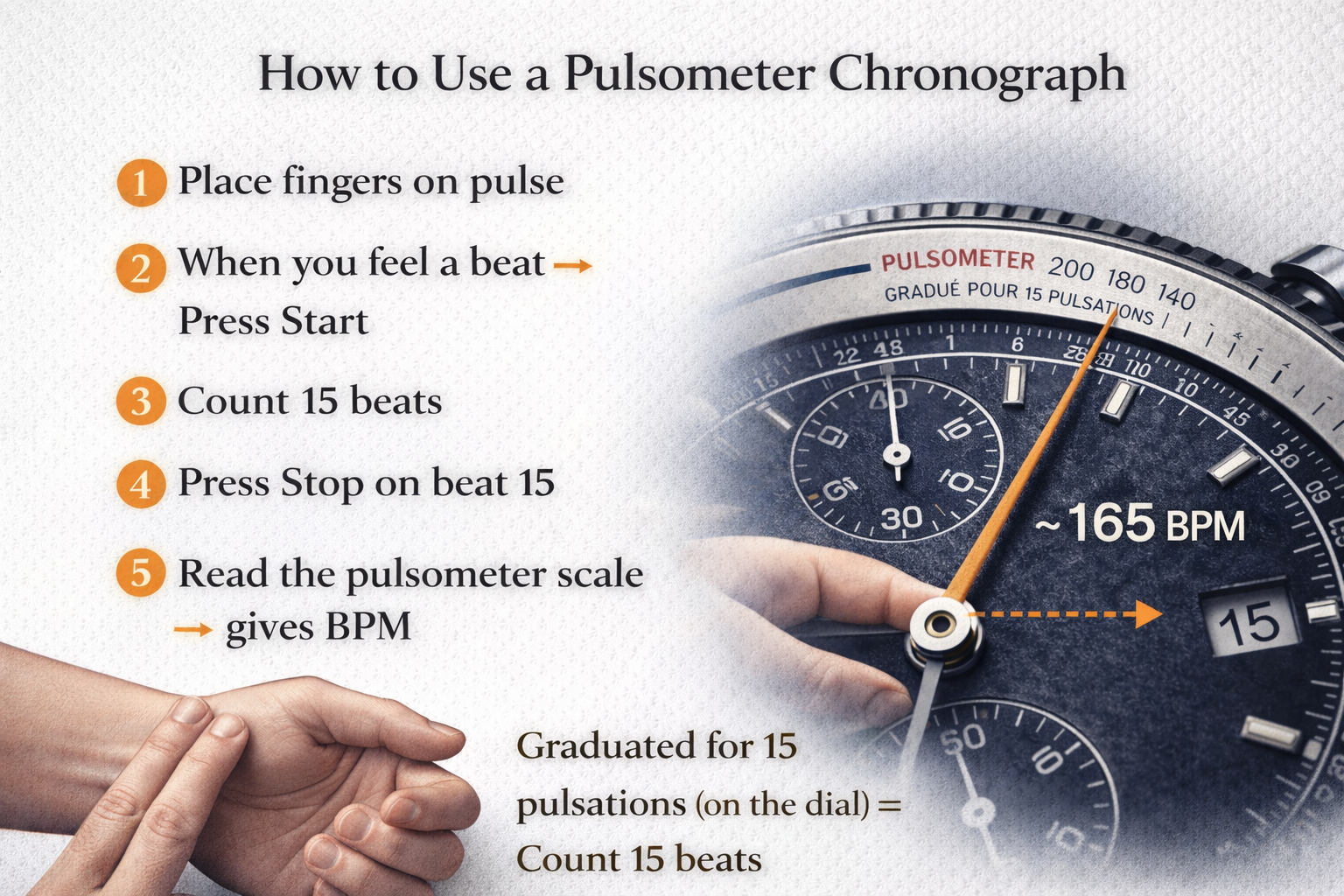 A pulsometer is a chronograph scale designed to estimate heart rate (beats per minute). It’s a classic medical-style watch feature, but it still works today as long as you follow the scale’s counting rule.
If you need a quick chronograph refresher first:
Chronograph Explained: What It Is, How It Works, and Common Mistakes to Avoid
Quick Answer
-
Start the chronograph on a heartbeat
-
Count a fixed number of beats (often 15 or 30)
-
Stop the chronograph on the last beat
-
Read the pulsometer number where the seconds hand points → that’s BPM
What Makes Pulsometer Different From Tachymeter/Telemeter?
Pulsometer is purpose-built for heart rate:
| Scale | Measures | What you need |
|---|---|---|
| Pulsometer | Heart rate (BPM) | Counted beats (15/30) |
| Telemeter | Distance via sound delay | Flash + sound |
| Tachymeter | Rate per hour | Known distance/quantity |
Telemeter guide :
Telemeter Scale Explained: How to Measure Distance With a Chronograph
Step-by-Step: Measure BPM Using a Pulsometer (15-beat Example)
Before you start: check your dial text
Many pulsometer scales are printed with a rule like:
-
“Graduated for 15 pulsations”
or -
“Base 30” / “30 pulsations”
That tells you how many beats to count.
Example (15 beats)
-
Place fingers on pulse
-
When you feel a beat, press Start
-
Count 15 beats
-
Press Stop on beat 15
-
Read the pulsometer scale → gives BPM
Why it works: the scale already converts “time for 15 beats” into beats-per-minute.
If Your Pulsometer Is Based on 30 Beats
Same process, just count 30 beats before stopping.
30-beat scales can reduce error because longer timing averages small counting mistakes.
Common Mistakes (And How to Avoid Them)
1) Counting the wrong number of beats
If the dial says “15 pulsations” but you count 30, your reading will be wrong.
2) Starting late
Start exactly on a beat. A one-beat delay can shift the reading.
3) Using it during irregular rhythm
If beats are irregular, any quick method becomes less precise—measure longer or use a dedicated device.
Does Using the Chronograph Affect Accuracy or Wear?
Using the chronograph doesn’t harm a healthy movement, but chronographs have more parts, so:
-
keep pushers clean
-
don’t force them
-
service on schedule when needed
Care routine:
How to Maintain an Automatic Watch: Daily Wear, Storage & Servicing
Service guidance:
How Often Should You Service an Automatic Watch?
Accuracy baseline:
Are Automatic Watches Accurate? Real-World Tolerances, Why They Drift & How to Improve Accuracy
Want to understand why some chronographs start smoother or handle engagement differently? Read Vertical vs Horizontal Clutch:
Vertical vs Horizontal Clutch Chronograph: Differences, Pros, Cons & Which You Should Choose
Curious why some chronographs have a more refined pusher feel and switching? Read Column Wheel vs Cam Chronograph:
Column Wheel vs Cam Chronograph: Differences, Feel, Reliability & What to Choose
FAQ: Pulsometer Scale
What does a pulsometer measure?
Heart rate in beats per minute (BPM).
Do I need a special watch to use it?
Yes—the dial or bezel must have a pulsometer scale. You also need a chronograph.
Is 15 beats accurate enough?
It’s a quick estimate. For better accuracy, use 30 beats if your scale supports it, or measure longer.
Can I use a pulsometer for respiration rate?
Not directly—the scale is calibrated for pulse beats. Some watches have separate scales for respiration.