Column Wheel vs Cam Chronograph: Differences, Feel, Reliability & What to Choose
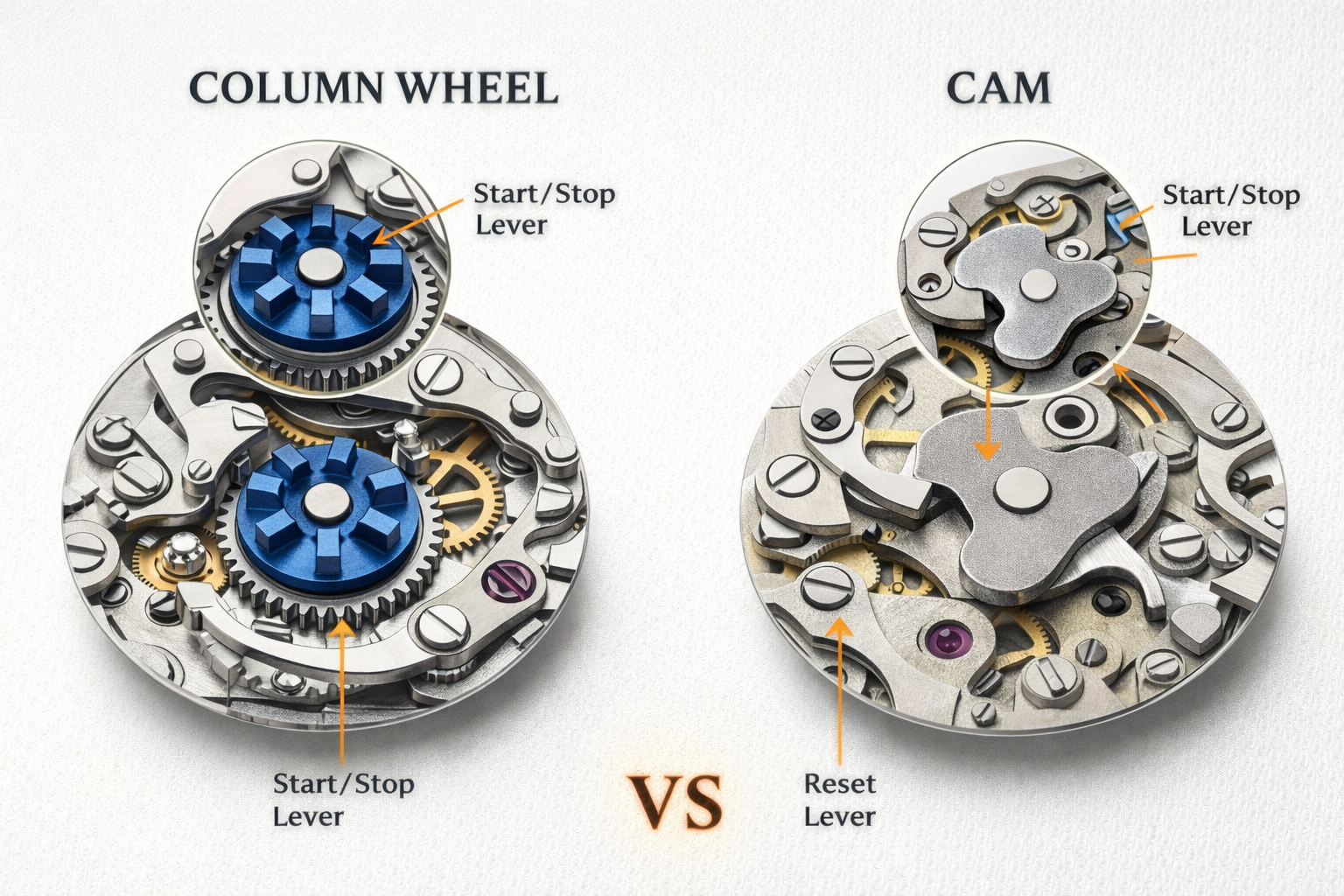 When people talk about a chronograph’s “feel,” they’re often talking about one internal part: the switching system. Most chronographs use either a column wheel or a cam (cam-and-lever) system to control start/stop/reset.
If you haven’t read the basic overview first, start here:
Chronograph Explained: What It Is, How It Works, and Common Mistakes to Avoid
Quick Answer
-
Column wheel chronographs are often associated with a smoother, more refined pusher feel and premium construction (though not always).
-
Cam chronographs are typically more robust, cost-efficient, and widely used, with a pusher feel that can be slightly firmer or “clickier” depending on execution.
-
Neither is automatically “better”—good engineering matters more than the label.
What the Switching System Does (Simple)
Every chronograph must do three things:
-
Start the timing train
-
Stop it
-
Reset the hands to zero
The switching system coordinates those actions by controlling levers and engagement points.
Movement basics context:
How Does an Automatic Watch Work? Simple Beginner Guide
Column Wheel: What It Is
A column wheel is a wheel with “columns” (pillars) around its edge. When you press a pusher, levers move and lock into different positions around the columns, precisely sequencing start/stop/reset.
Why people like it
-
Often produces a clean, smooth pusher action
-
Mechanically elegant and satisfying
-
Frequently used in higher-end chronographs (but not exclusively)
What matters in real life
-
Quality of finishing and adjustment
-
Overall movement design (clutch type, tolerances, lubrication)
Cam Chronograph: What It Is
A cam (cam-and-lever) system uses a shaped cam to move levers into start/stop/reset positions. It’s proven, efficient, and used by many respected chronographs.
Why it’s popular
-
Durable and widely serviceable
-
Often simpler to manufacture at scale
-
Can be very reliable for daily use
What matters in real life
-
Pusher feel depends heavily on implementation
-
Well-made cam chronographs can feel excellent
Servicing expectations apply either way:
How Often Should You Service an Automatic Watch?
Pusher Feel: Why Column Wheel Often Feels “Smoother”
Pusher feel is influenced by:
-
how levers are guided and locked
-
spring tension and geometry
-
friction surfaces and finishing
-
adjustment quality
A well-executed column wheel can feel buttery and controlled.
A well-executed cam system can still feel crisp and confident—sometimes even preferable if you like a more tactile click.
Column Wheel vs Cam: Reliability
Key truth:
Reliability is mostly about:
-
movement quality
-
correct lubrication and servicing
-
how the chronograph is used (and abused)
Use tips and common mistakes (important for both types):
Chronograph Explained: Common Mistakes to Avoid
How This Relates to Vertical vs Horizontal Clutch
The switching system (column wheel vs cam) is different from the clutch (vertical vs horizontal). Many chronographs combine them in different ways.
Read the clutch guide here:
Vertical vs Horizontal Clutch Chronograph: Differences, Pros, Cons & Which You Should Choose
Does This Affect Accuracy?
The switching system itself does not determine timekeeping accuracy, but running the chronograph function may affect the trajectory of certain bearings, thus slightly affecting timekeeping.
Are Automatic Watches Accurate?
If it suddenly runs fast/is unstable, first check for magnetization:
Watch Magnetism: Signs Your Watch Is Magnetized, How to Test It
Which Should You Choose?
Prefer column wheel if you care most about:
-
refined pusher feel
-
“premium chronograph” experience
-
mechanical elegance
Prefer cam if you care most about:
-
proven practicality and wide service familiarity
-
value and robustness
-
you don’t mind a firmer click
If you’re deciding between mechanical and quartz for convenience overall:
Automatic Watch vs Quartz
FAQ: Column Wheel vs Cam
Are column wheel chronographs more accurate?
Not necessarily. Accuracy depends on regulation, condition, and usage.
Do cam chronographs wear out faster?
Not inherently. With proper servicing, both can last decades.
Why do some chronographs feel “mushy”?
Often due to adjustment, wear, or lubrication issues—not the switching system alone.
Should I leave the chronograph running?
Depends on the movement design. If you like leaving it running, read the clutch guide (vertical vs horizontal).