Chronograph Explained: What It Is, How It Works, and Common Mistakes to Avoid
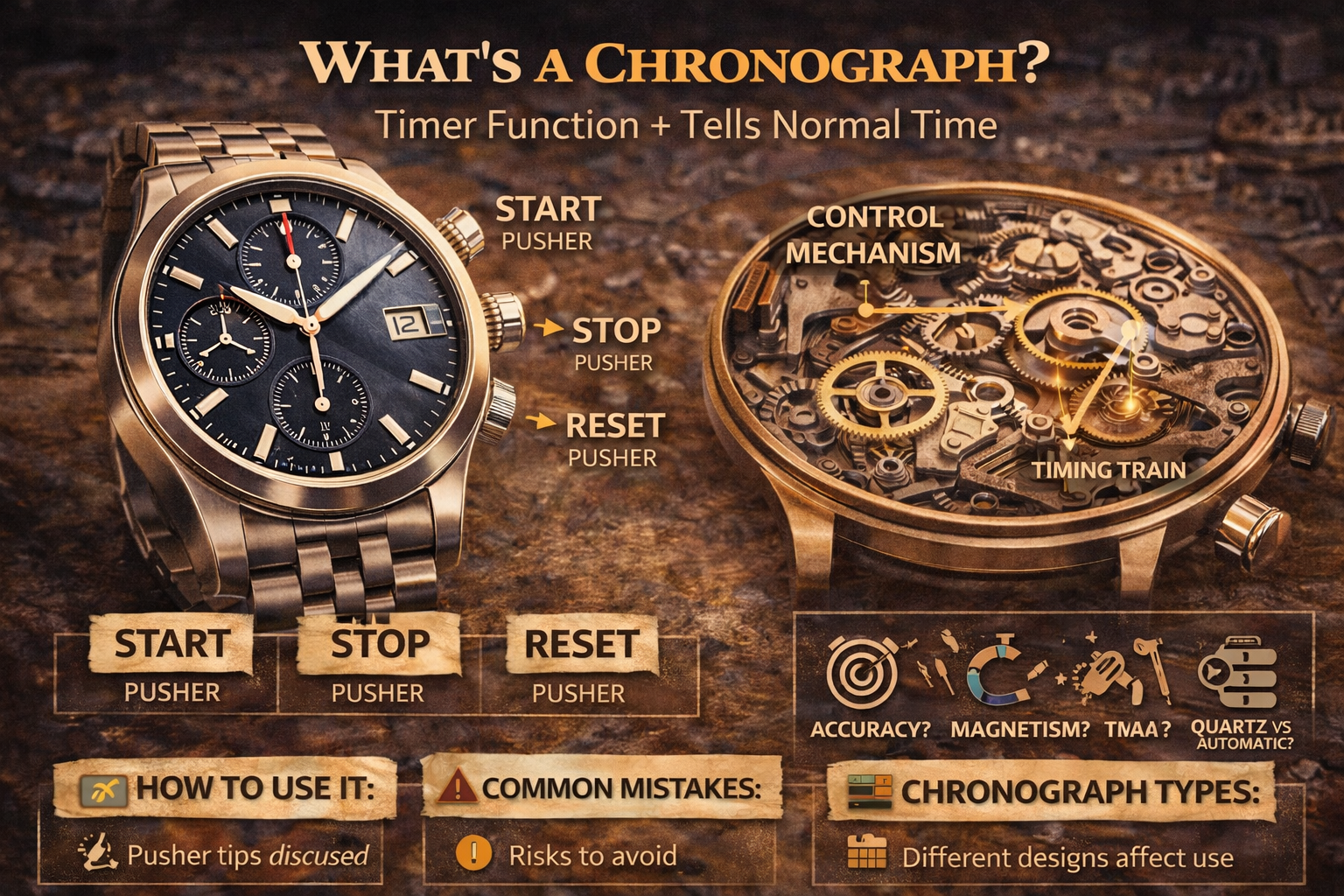 A chronograph is a watch with a built-in stopwatch function. It lets you measure elapsed time using one or more sub-dials and pushers (buttons). Chronographs are popular—but they also introduce extra mechanics, which means it’s worth learning how to use them correctly.
If you want a quick baseline on movements first, read:
How Does an Automatic Watch Work? Simple Beginner Guide
Quick Answer: What a Chronograph Does
A chronograph lets you:
-
Start timing (pusher)
-
Stop timing (pusher)
-
Reset to zero (pusher)
while the watch continues to tell normal time.
Chronograph vs Chronometer (Common Confusion)
-
Chronograph = stopwatch function
-
Chronometer = accuracy certification/standard (not a stopwatch)
Accuracy reference:
Are Automatic Watches Accurate?
How a Chronograph Works (Simple)
Inside, a chronograph adds a separate mechanism that connects/disconnects the timing train from the running movement.
When you press start:
-
a coupling system engages the chronograph seconds hand
When you press stop: -
it disengages
When you reset: -
hammers snap the chronograph hands back to zero
This extra system can affect:
-
power consumption
-
long-term servicing complexity
Service guide:
How Often Should You Service an Automatic Watch?
How to Use a Chronograph Safely (Best Practices)
1) Don’t reset while it’s running
Stop first, then reset. Resetting while running can cause unnecessary stress depending on the design.
2) Avoid pushing buttons underwater (unless specifically designed for it)
Even if the watch has water resistance, pushers may not be safe underwater unless the brand explicitly says so.
3) If the pushers feel rough—don’t force them
That’s a sign to check the watch.
General care habits:
How to Maintain an Automatic Watch: Daily Wear, Storage & Servicing
Does Running the Chronograph Affect Accuracy?
Sometimes. Running the chronograph can reduce amplitude on some movements, which may slightly affect timekeeping.
If you’re tracking drift, use this as your baseline:
Are Automatic Watches Accurate? Real-World Tolerances, Why They Drift & How to Improve Accuracy
Why Chronographs Can Be More Sensitive to Magnetism
Chronographs have more components and sometimes stronger exposure during daily use (phones, laptops, speakers). If your watch suddenly runs fast or acts erratically:
Watch Magnetism: Signs Your Watch Is Magnetized, How to Test It
FAQ: Chronographs
Can I leave my chronograph running all day?
Often yes, but it may reduce power reserve and can add wear over time. It’s best used when needed.
Why does my chronograph seconds hand “jump” at start?
Some chronographs show a small start jump depending on the coupling design.
Is a chronograph harder to maintain?
Typically yes—more parts and more adjustment points. That’s why servicing matters.
Chronograph or quartz for daily timing convenience?
Quartz is simpler for set-and-forget convenience. Compare:
Automatic Watch vs Quartz: Differences, Pros & Which to Choose