Can You Overwind an Automatic Watch?
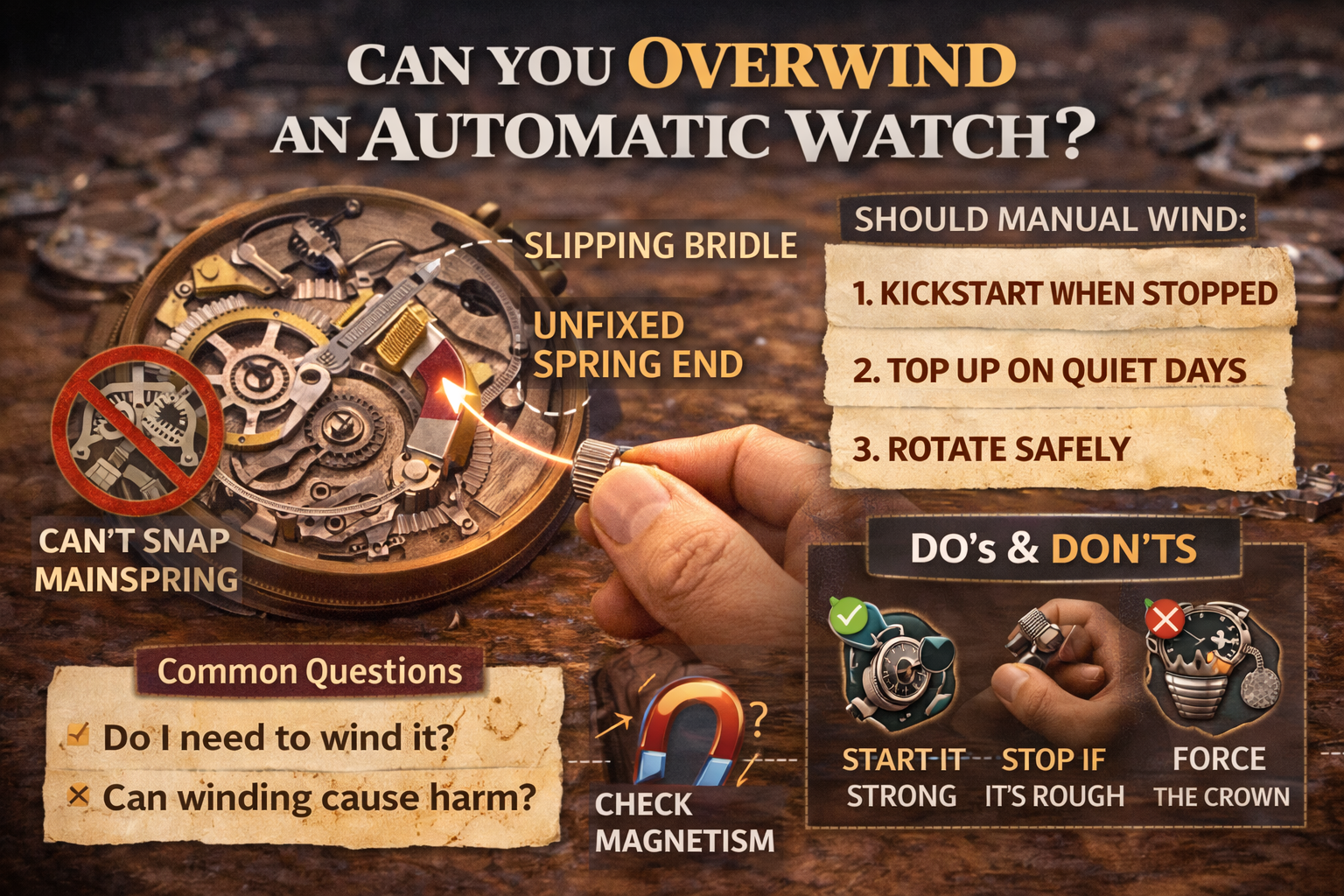 The short answer: most modern automatic watches cannot be “overwound” in the traditional sense. That’s because they’re designed with a mechanism that prevents the mainspring from being wound beyond its safe limit.
However, you can still cause problems with poor habits—like forcing a crown, setting at unsafe times, or ignoring resistance.
If you’re new to automatics, start with the basics here:
What Is an Automatic Watch? Pros, Cons & Who Should Buy One
Quick Answer
-
Most automatic watches won’t “overwind” because the mainspring uses a slipping bridle that allows it to slide once it’s fully wound.
-
If your crown feels unusually tight/rough, stop—don’t force it.
-
If your watch is stopped and you want it to run reliably, a small manual wind is often the best start.
To understand what’s happening inside, read:
How Does an Automatic Watch Work? Simple Beginner Guide
Why Most Automatics Can’t Be Overwound
In many modern automatic movements, the mainspring’s outer end is attached via a slipping bridle rather than a fixed hook. When the spring reaches full wind, the bridle slips against the barrel wall—preventing additional tension build-up.
That’s why:
-
Your watch can keep winding via the rotor while you wear it
-
It won’t “snap” the mainspring just because it’s fully wound
When Manual Winding Is Still Useful
Even though an automatic winds itself on-wrist, manual winding helps in these situations:
1) The watch is completely stopped
A brief wind helps it start strong and stabilize timekeeping.
2) Low-activity days
If you’re at a desk all day, rotor winding may not fully top up power reserve.
3) You rotate watches often
A small wind when you put it on makes it less likely to stop early.
If your watch stops when not worn, that’s usually normal power reserve behavior:
Do Automatic Watches Stop If Not Worn? Power Reserve, Why It Happens & Easy Fixes
Safe Manual Winding: Best Practice
Use this simple routine:
-
Crown in the normal position (not pulled out for time/date)
-
Wind slowly and smoothly
-
If you feel unusual resistance or roughness, stop
-
Put the watch on and let normal wear do the rest
You don’t need to “max it out” every time. The goal is a healthy starting charge.
For daily habits and storage (which matter more than perfect winding technique):
How to Maintain an Automatic Watch: Daily Wear, Storage & Servicing
What You Should NOT Do
1) Don’t force the crown
If you feel grinding, skipping, or sudden stiffness—forcing can damage the crown/stem or keyless works.
2) Don’t change the date in the “danger zone”
This is one of the most common ways owners cause problems.
Follow this guide:
How to Set an Automatic Watch Safely (Time, Date, and the “Danger Zone” Explained)
3) Don’t assume “running fast” is overwinding
Overwinding is rarely the cause of a watch suddenly running fast. More common causes include magnetism or regulation changes.
Start here:
Watch Magnetism: Signs Your Watch Is Magnetized, How to Test It
And the accuracy baseline:
Are Automatic Watches Accurate?
Does Winding Affect Accuracy?
Indirectly, yes. Many movements keep time more consistently when they’re not near empty. If your watch is frequently low on power, you may see more variation.
That said, if accuracy is suddenly far off, look first at magnetism or service needs:
-
Magnetism:Watch Magnetism: Signs Your Watch Is Magnetized, How to Test It
-
Service guidance: How Often Should You Service an Automatic Watch? Intervals, Costs, Warning Signs & What to Expect
Automatic vs Quartz: If You Want Less Maintenance
Quartz doesn’t require winding and is generally easier for set-and-forget accuracy. Compare here:
Automatic Watch vs Quartz: Differences, Pros & Which to Choose
FAQ: Overwinding Automatic Watches
Can you overwind an automatic watch by hand?
In most modern automatics, no, because the mainspring slips at full wind. But you can still damage the crown if you force it.
My crown got very tight—what does that mean?
Stop winding. It could be normal near full wind on some designs, or it could indicate an issue. If it feels rough or unusual, have it checked.
Should I wind my automatic watch every day?
If you wear it daily, usually no. If you rotate watches or have low activity days, a small wind can help.
Is overwinding why my watch runs fast?
Usually not. Sudden fast running is more often magnetism:
Watch Magnetism: Signs Your Watch Is Magnetized, How to Test It
Will a watch winder “overwind” an automatic?
Most automatics can’t be overwound, but a winder can keep it running constantly. Use conservative settings and good storage habits:
How to Maintain an Automatic Watch: Daily Wear, Storage & Servicing