Bracelet Watch vs Leather Strap Watch: Which One Is Better as Your First Automatic?
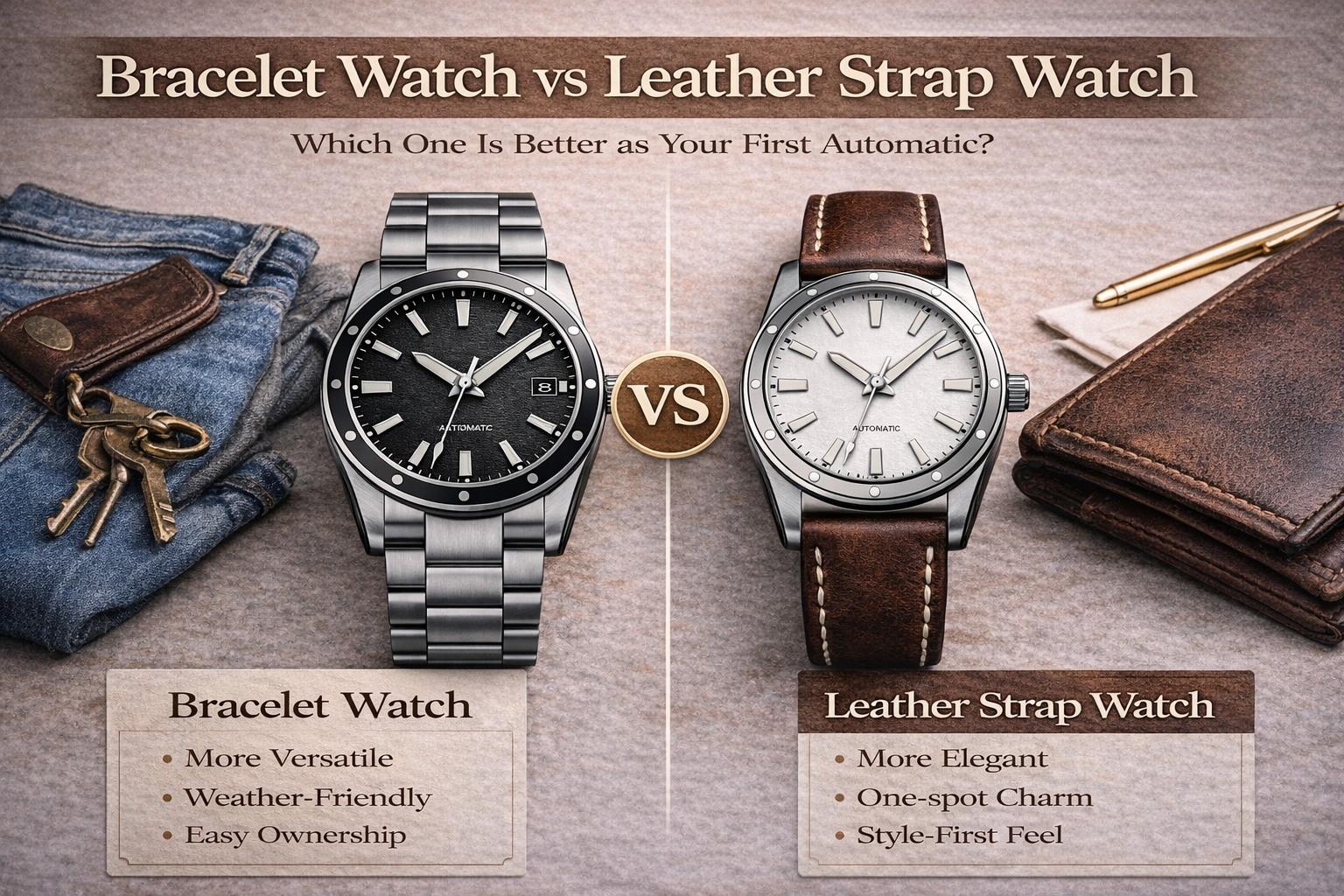
Bracelet Watch vs Leather Strap Watch: Which One Is Better as Your First Automatic?
A lot of first-time buyers think they are choosing a watch head.
In real life, they are also choosing a lifestyle setup.
That is why the decision between a bracelet watch and a leather strap watch matters much more than many beginners expect. The same automatic watch can feel more rugged, more versatile, and more complete on a bracelet. On leather, that same watch can feel slimmer, more refined, and much more dress-focused.
So here is the practical answer first:
For most first-time buyers, a bracelet watch is the safer first automatic because it is more versatile, more weather-friendly, and usually better long-term value. A leather strap watch can still be the better first choice if your wardrobe is dressier, your routine is mostly dry, and elegance matters more than versatility.
That is the short version.
The better answer depends on how you actually dress, how often you wear the watch, your climate, and whether you want your first automatic to feel more like a practical daily companion or a more refined personal accessory.
If you are still early in the learning stage, it helps to start with What Is an Automatic Watch? Pros, Cons & Who Should Buy One and Best Automatic Watches for Beginners: Top Picks & Buying Tips. But if your real question is “bracelet or leather for my first automatic?”, this guide is the practical version.
The short answer: what is the real difference?
The simplest way to think about it is this:
- Bracelet = safer first-watch versatility
- Leather = stronger style identity
A bracelet watch usually gives you:
- easier daily use
- better weather tolerance
- more casual-to-smart versatility
- stronger “one watch” potential
- better long-term buying flexibility
A leather strap watch usually gives you:
- more elegance
- a lighter visual feel
- stronger dress appeal
- more warmth and character
- a more intentional style statement
Neither is automatically better. But for a first automatic, the safest answer is usually the one that makes ownership easier, not just prettier.
Why this decision matters so much for a first automatic
Because your first automatic has to teach you how you actually wear watches.
That means it usually needs to survive:
- commuting
- office use
- weekends
- weather
- changing outfits
- travel
- accidental overuse
- normal beginner uncertainty
A bracelet usually handles that uncertainty better.
A leather strap may look perfect in the first five minutes, but ownership is longer than first impression. If your first watch feels limited too quickly, you may wrongly assume the whole watch was the problem when really the strap choice was the problem.
That is why this is not a small accessory question.
It is part of the first-watch decision itself.
Bracelet watch vs leather strap watch: the real-life comparison
| Category | Bracelet Watch | Leather Strap Watch |
|---|---|---|
| First-watch safety | Usually better | More lifestyle-dependent |
| Everyday versatility | Strong | Medium |
| Formality | Medium to strong | Stronger |
| Weather tolerance | Higher | Lower |
| Long-term value feel | Higher | Medium |
| Comfort | Solid, secure, depends on fit | Soft, light, easy initially |
| Summer use | Better | Harder |
| Best for | One-watch ownership, beginners, mixed daily life | Dressier wardrobes, office-smart wear, style-first buyers |
That chart captures the whole decision quickly.
If you want the safer broad-answer choice, bracelet usually wins.
If you already know you want a refined, dressier watch experience, leather becomes much more attractive.
Why bracelet is usually the smarter first automatic
For most beginners, bracelet wins for one simple reason:
it gives you fewer reasons to regret the purchase early.
A bracelet watch usually feels easier because it handles:
- casual clothes
- office-casual wear
- sweat
- rain
- daily friction
- travel
- mixed routines
And maybe most importantly, it usually feels like the more complete purchase.
That matters because first-time buyers often do not yet know how their taste will evolve. A bracelet gives more room. You can always put the watch on leather later. Going the other way is often harder, more expensive, or less satisfying.
That flexibility is a big deal in a first automatic.
Why leather feels so good at first
Because leather gives instant charm.
A watch on leather often feels:
- slimmer
- more elegant
- more mature
- more traditional
- more like a “real watch” in the romantic sense
That reaction is understandable. Leather softens the watch. It makes a simple dial look warmer and more personal. It can also make a modest automatic feel much more expensive than it really is.
That is especially true on dressier pieces and cleaner dial designs. It is a big reason so many buyers are drawn toward leather first.
But first attraction and long-term suitability are not always the same thing.
The biggest practical advantage of bracelet: better all-round ownership
A bracelet makes first-watch ownership easier in ways beginners often underestimate.
1. It handles weather better
Rain, humidity, hand-washing, summer heat, and general daily exposure are all easier on metal than leather.
2. It makes the watch feel more like an everyday object
You worry less about sweating into it, splashing it, or wearing it longer than planned.
3. It often improves resale and “value feel”
Even if you never sell it, a watch on bracelet often feels like the more complete purchase.
4. It gives more styling flexibility
A bracelet can go casual surprisingly well and still work in many office or dinner settings.
That is why so many versatile daily watches are strongest on bracelet.
The biggest emotional advantage of leather: stronger style identity
Leather wins when style matters more than broad practicality.
A leather strap often makes a watch feel:
- more intentional
- more elegant
- more classic
- more personal
- less generic
It can also reduce visual bulk. A watch that looks a little plain or a little too sporty on bracelet may suddenly feel right on leather.
That is one reason dressier watches and more refined automatics often come alive on leather.
If your taste leans formal or elegant, that can matter more than any practical argument.
Why beginners often underestimate climate
This is one of the most common first-watch mistakes.
A buyer sees a beautiful automatic on brown or black leather and imagines:
- office wear
- café tables
- clean shirts
- quiet sophistication
Then real life appears:
- heat
- sweat
- walking
- commuting
- unpredictable weather
- longer wear days than expected
That is where leather can become less charming.
A bracelet usually gets easier in heat. Leather usually gets harder.
If you live somewhere warm or humid, or simply run hot, bracelet becomes even stronger as a first-watch choice.
Real-world buyer case #1: the one-watch beginner
This is the most common first automatic buyer.
They want one watch for:
- weekdays
- weekends
- dinners
- occasional travel
- daily life in general
For this buyer, bracelet almost always makes more sense.
Why?
Because the watch needs to do more than look good in one setting. It needs to survive different clothes, different weather, and daily unpredictability. Bracelet handles that broader role better.
This is exactly why so many beginner-friendly options across different budgets lean toward bracelet-first buying. It gives the new owner more room to learn what they like.
Real-world buyer case #2: the office-smart buyer
This person wears:
- shirts
- knitwear
- tailored trousers
- loafers or smart shoes
- cleaner office clothing
Their daily life is more controlled and less weather-exposed. They care more about elegance than sportiness.
For this buyer, leather can absolutely be the better first automatic.
Why?
Because bracelet may solve broader practical life, but still feel slightly wrong most of the time. If elegance is the actual baseline, leather may be the more honest answer.
This is especially true on refined watches similar in spirit to those in Best Automatic Dress Watches Under $1000: Elegant Picks for Formal Style.
Real-world buyer case #3: the casual daily wearer
This person wears:
- jeans
- T-shirts
- overshirts
- sneakers or boots
- casual office clothing
- mixed weekend clothes
For this buyer, bracelet is usually far better.
A leather strap may still look nice, but it will often feel too dress-adjacent, too delicate for the pace of daily life, or just slightly less natural with the wardrobe. Bracelet usually fits better with this kind of routine.
Which one is more versatile with clothes?
For most people, bracelet.
That is the most practical answer.
A bracelet watch usually works well with:
- casual clothing
- smart-casual clothing
- office wear
- travel outfits
- many dinner settings
- mixed daily use
Leather is more style-specific. When it works, it works beautifully. But it usually leans the watch toward one direction: cleaner, dressier, more intentional.
So if versatility is the main goal, bracelet has the edge.
Which one is more comfortable?
This depends on what kind of comfort you mean.
Leather comfort
Leather often feels more comfortable immediately. It is soft, flexible, and lighter in feel. Many people put on a leather strap and instantly think, “Yes, this feels better.”
Bracelet comfort
A well-sized bracelet often wins later. Once adjusted properly, it can feel very secure, balanced, and easier through long daily wear because it handles sweat, movement, and changing conditions better.
So the honest answer is:
- leather often feels better in the first ten minutes
- bracelet often feels easier in the tenth hour
For a first automatic, that distinction matters.
Which one is better in summer?
Usually, bracelet.
That is one of the clearest answers in the entire topic.
A bracelet usually handles:
- heat
- sweat
- humidity
- longer wear
- easier cleaning
much better than leather.
If summer comfort matters to you at all, bracelet becomes much more compelling as a first-watch choice.
Which one looks more expensive?
This is subjective, but there is a pattern.
Leather often looks more refined
It can make a watch feel:
- dressier
- more considered
- more elegant
- more quietly premium
Bracelet often looks more substantial
It can make a watch feel:
- more complete
- more serious
- more robust
- more expensive as a total package
So leather often wins in elegance. Bracelet often wins in completeness.
That is why buyers who care about style may lean leather, while buyers who care about overall value feel often lean bracelet.
Which one is better for a GADA-style first watch?
Usually, bracelet.
A Go Anywhere, Do Anything-style first automatic should feel natural in the widest range of situations. Bracelet usually supports that better because it reduces weather anxiety, broadens styling range, and keeps the watch more neutral.
Leather can still work in a more refined GADA context, especially if the owner dresses smartly most of the time. But if you want the lower-risk first-watch answer, bracelet is usually the stronger foundation.
Which one is better for a smaller wrist?
This is more nuanced.
Leather can help a watch wear smaller
Because it reduces visual mass and softens the overall presence.
Bracelet can still work well
But it needs to taper nicely and the watch head itself must be proportioned properly.
So for smaller wrists, leather can sometimes make a borderline watch feel more wearable. But that does not automatically make leather the better first-watch choice overall. It just means fit and visual weight need more attention.
If sizing is already one of your main concerns, Best Automatic Watches for Small Wrists: What to Look for Before You Buy is worth pairing with this decision.
Which one ages better over time?
For most buyers, bracelet.
Not because it is more beautiful, but because it usually stays useful longer.
A bracelet ages well because:
- it handles more environments
- it stays relevant as routines change
- it feels easier across seasons
- it supports one-watch ownership better
Leather can age beautifully too—but often more emotionally than practically. A great leather-strap watch may still be loved deeply, but not necessarily worn as often if your life shifts toward more casual, hot, or unpredictable daily use.
So the average buyer usually gets more long-term daily value from bracelet.
The smartest first-watch strategy most buyers miss
This is the most practical advice in the whole article:
Buy the watch on bracelet first, then add leather later if you want.
Why is this so smart?
Because:
- bracelet is often more expensive to add later
- bracelet gives you the broader base setup
- leather is easy to add later for dressier moods
- you learn more about your taste without limiting your first purchase
This is one of the safest first-automatic buying strategies there is.
It gives you both flexibility and room to evolve.
What buyers often get wrong
1. Buying leather because it looks more romantic
It may still be right, but many first-time buyers underestimate weather, sweat, and routine.
2. Choosing bracelet only because others say it is practical
That can also go wrong if your actual life is much dressier and you care deeply about elegance.
3. Ignoring how often the watch will be worn
A first watch worn daily needs broader tolerance than a second watch bought for style.
4. Treating the strap as a small detail
It is not. It changes the entire character of the watch.
A quick practical test before you buy
Ask yourself these four questions:
1. Will this be my only watch for a while?
If yes, bracelet gets stronger.
2. Do I live in a warm or humid climate?
If yes, bracelet gets stronger.
3. Do I wear smart clothes most of the week?
If yes, leather gets stronger.
4. What would annoy me more after three months?
- the watch feeling too dressy and limited
- or the watch feeling slightly less elegant than ideal
For most beginners, the first problem is more damaging. That is why bracelet usually wins.
Which one should most buyers choose?
Here is the most honest recommendation.
Choose a bracelet watch if:
- this is your first automatic
- you want one watch for most situations
- your wardrobe is mixed or casual-heavy
- you value practicality and flexibility
- you live in a warm or unpredictable climate
- you want the safer buying choice
Choose a leather strap watch if:
- your wardrobe is clearly dressier
- elegance matters more than broad versatility
- your routine is mostly office-smart and dry
- you already know you dislike bracelet feel
- the watch is meant to feel refined first
If you are unsure
Choose bracelet first.
That is usually the smarter beginner answer.
FAQ
Is bracelet or leather better for a first automatic watch?
For most buyers, bracelet is better as a first automatic because it offers more versatility, better weather tolerance, and stronger long-term flexibility.
Can a leather strap watch still be a good first automatic?
Yes. It can be an excellent first automatic if your style is dressier, your daily life is more controlled, and elegance matters more than broad practicality.
Why do people say buy the bracelet first?
Because bracelets are often more expensive or harder to add later, while leather straps are easier to buy afterward. Starting with bracelet gives more flexibility.
Is a bracelet too sporty for office wear?
Usually not. A well-designed bracelet watch can work very well in office and smart-casual settings, especially if the watch itself is balanced.
Is leather more comfortable than bracelet?
Leather often feels softer right away, but a properly sized bracelet can be easier to live with over long daily wear, especially in heat and changing conditions.
What is better for a one-watch collection: bracelet or leather?
Usually bracelet, because it handles a wider range of situations and creates fewer ownership limitations.
Final verdict
If you want the simplest possible takeaway:
- Bracelet is usually better for your first automatic
- Leather is better when style and elegance clearly come first
- Bracelet is the safer one-watch answer
- Leather is the more lifestyle-specific answer
That is the real difference.
Not which one is more “serious.”
Not which one looks better in one product photo.
Not which one sounds more enthusiast-approved.
The real question is:
Do you want your first automatic to be easier to live with, or more elegant from day one?
If you want easier ownership, choose bracelet.
If you want stronger refinement and already know your lifestyle supports it, choose leather.
And for most first-time buyers,
bracelet is still the smarter place to start.