Automatic Watch Size Guide: 36mm vs 38mm vs 40mm vs 42mm — What Actually Fits Your Wrist?
 Most first-time buyers think watch size is simple: bigger wrist, bigger watch. In real life, it is not that clean.
A 38mm watch can wear larger than a 40mm watch. A 42mm diver can feel perfectly balanced on one wrist and awkward on another. And many people who say a watch “just didn’t feel right” are really talking about fit, not movement quality.
So if you are shopping for your first automatic watch—or trying to avoid an expensive sizing mistake—this is the practical rule:
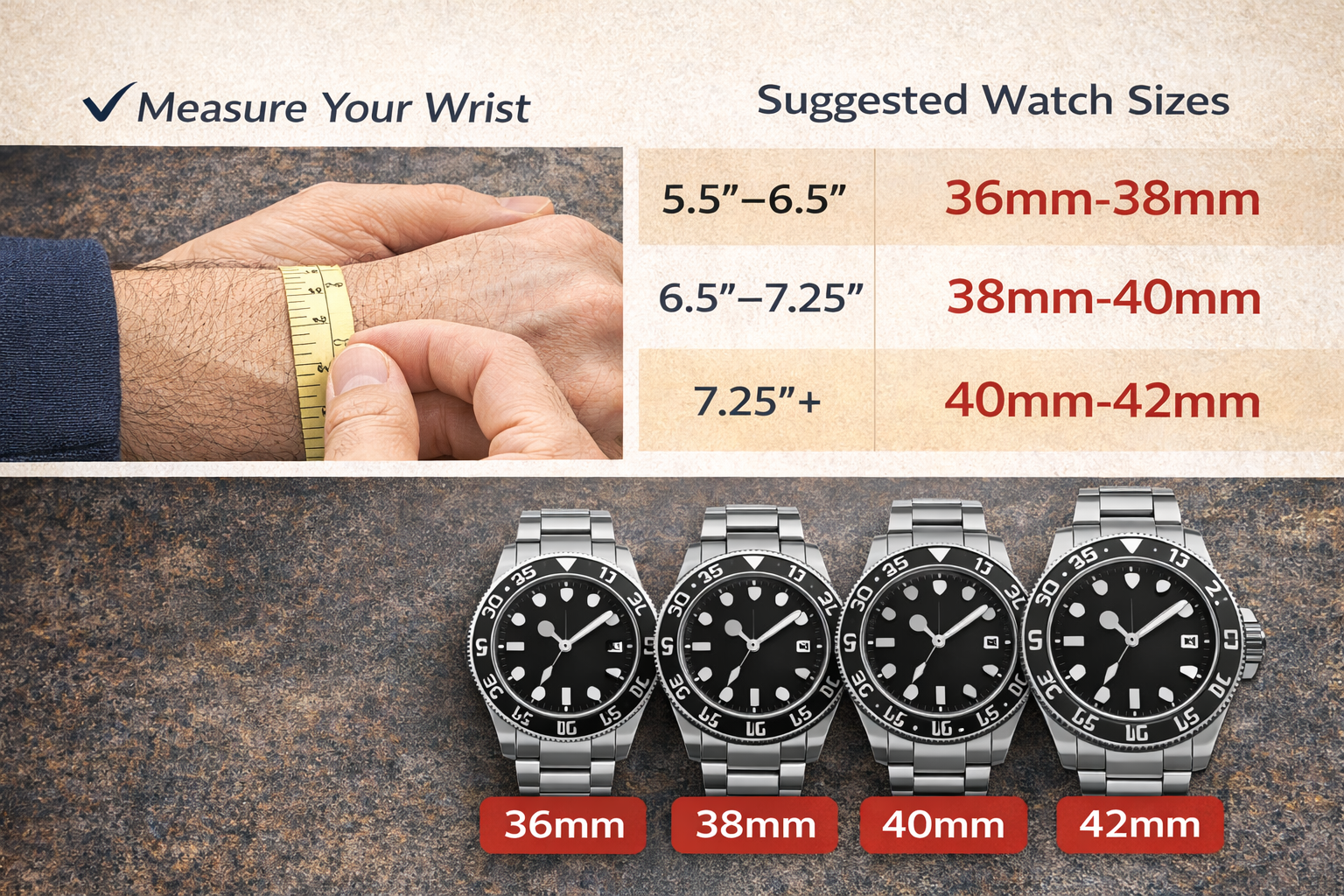
36mm to 38mm usually works best for smaller wrists and dressier looks, 38mm to 40mm is the safest all-round range for most people, and 40mm to 42mm works best when you want a more sporty, tool-watch feel.
But diameter is only part of the story. Lug-to-lug length, thickness, bezel size, and strap choice matter just as much.
If you are still new to mechanical watches, it helps to first understand what an automatic watch is and how it differs from quartz, because the way an automatic watch wears is often part of the appeal.
Quick answer: what size automatic watch should you buy?
Here is the short version most buyers actually need:
- 36mm: best for smaller wrists, classic proportions, dress watches, and people who prefer understated style
- 38mm: one of the safest sizes on the market; balanced, versatile, and easy to wear daily
- 40mm: the modern sweet spot for many buyers; still versatile, but with more wrist presence
- 42mm: best when you want a sportier look, more dial presence, or a chunkier tool-watch feel
If you are between two sizes, go smaller unless you know you want a bold sports-watch look.
That simple rule alone will save many buyers from choosing a watch that looks great in product photos but feels oversized every day.
Why watch diameter does not tell the whole story
Two watches with the same case diameter can feel completely different on the wrist.
Here is why:
1. Lug-to-lug length changes everything
Lug-to-lug is the distance from the tip of the top lug to the tip of the bottom lug. This often matters more than case diameter.
A 40mm watch with short lugs may wear smaller than a 38mm watch with long, straight lugs. If the lugs stick out past the flat top of your wrist, the watch usually looks too large, even if the diameter sounds reasonable on paper.
2. Bezel width affects visual size
A watch with a wide bezel and smaller dial opening often wears smaller than a watch with a thin bezel and large dial opening.
That is one reason a 42mm dive watch does not always feel as huge as a 42mm pilot-style watch.
3. Thickness affects comfort
A watch can have the “right” diameter and still feel wrong if it is too thick. A slim 38mm dress watch can disappear under a cuff. A tall 40mm sports watch may feel top-heavy on the same wrist.
4. Strap and bracelet change the fit
Bracelets usually make a watch feel more substantial. Leather often makes the same watch feel slightly smaller and dressier. Rubber can make a sports watch feel more casual and balanced.
This is one reason category matters. If you are looking at dress pieces, start with smaller proportions like those in our guide to the best automatic dress watches under $1000. If you prefer tougher everyday watches, sizing can stretch upward a bit in categories like automatic dive watches and automatic field watches.
Step 1: measure your wrist the right way
Before comparing 36mm, 38mm, 40mm, and 42mm, measure your wrist properly. This takes less than two minutes.
What you need
- A soft measuring tape
or - A strip of paper and a ruler
How to do it
- Wrap the tape or paper around your wrist where you normally wear a watch.
- Keep it snug, but not tight.
- Write down the circumference in inches or millimeters.
- If possible, also look at the flat top surface of your wrist, because that helps you judge whether a watch’s lug-to-lug will overhang.
A simple wrist-size reference
- 5.5" to 6.25" wrists: usually best with 34mm to 38mm
- 6.25" to 6.75" wrists: usually best with 36mm to 40mm
- 6.75" to 7.25" wrists: usually best with 38mm to 41mm
- 7.25" to 7.75" wrists: usually best with 40mm to 42mm
- 7.75"+ wrists: usually best with 41mm to 44mm
These are starting points, not hard rules. The style of watch still matters.
Step 2: use this practical size chart
Here is the easiest way to think about it.
| Wrist Size | Best Starting Range | Safest Everyday Size | Best If You Prefer Dressier Style | Best If You Prefer Sportier Style |
|---|---|---|---|---|
| 5.5"–6.25" | 34mm–38mm | 36mm–38mm | 35mm–37mm | 38mm–40mm |
| 6.25"–6.75" | 36mm–40mm | 38mm | 36mm–38mm | 40mm |
| 6.75"–7.25" | 38mm–41mm | 38mm–40mm | 37mm–39mm | 40mm–42mm |
| 7.25"–7.75" | 40mm–42mm | 40mm | 38mm–40mm | 41mm–42mm |
| 7.75"+ | 41mm–44mm | 41mm–42mm | 39mm–41mm | 42mm–44mm |
If you only remember one line from this article, remember this:
38mm to 40mm is the safest range for most buyers.
Step 3: match the watch size to how you actually dress
This is where many people go wrong. They choose a size based on trend photos, not on how they live.
If you wear office clothes most days
Start smaller.
A watch that needs to slide under a cuff usually feels better at 36mm to 39mm, especially if the case is slim. If you are looking for a more refined daily watch, smaller proportions often look more expensive and more intentional.
If you want one watch for everything
Start at 38mm to 40mm.
This is the most versatile range for daily wear. It works with T-shirts, knitwear, casual office clothing, and even some formal situations. For many buyers, this is the no-regret zone.
If you want a sporty or tool-watch feel
40mm to 42mm makes more sense.
This is where dive-style and chunkier everyday watches often feel right. The larger size gives you more wrist presence, more visual strength, and often better legibility at a glance.
If you are still narrowing down your first purchase, our guide to the best automatic watches for beginners is a useful next read because it helps balance fit, budget, and use case.
Real-world buyer scenarios
Let’s make this practical.
Case 1: the smaller-wrist office buyer
Wrist size: 6.1 inches
Use case: office, dinner out, occasional weekend wear
What looked good online: 40mm sports models
What actually fit best: 36mm to 38mm
In this kind of case, a buyer often assumes 40mm is the “normal” modern size. But once it goes on wrist, it can feel wide, tall, and visually dominant—especially if the lugs are long.
For this person, a 36mm or 38mm automatic watch usually looks cleaner, feels lighter, and works better with a shirt cuff. In daily life, that often means the watch gets worn more often.
Case 2: the first-time buyer who wants one watch
Wrist size: 6.75 inches
Use case: one watch for work, weekends, and travel
Best answer: 38mm to 40mm
This is one of the easiest scenarios. A buyer in this range usually does best with a balanced, medium-size watch that does not lean too dressy or too chunky.
A 38mm field watch can feel compact and versatile. A 40mm everyday sports watch can feel a little bolder without becoming oversized. If this buyer is budget-conscious, a good next step is our best automatic watches by budget guide.
Case 3: the larger-wrist sports-watch buyer
Wrist size: 7.3 inches
Use case: casual wear, outdoor use, more visual presence
Best answer: 40mm to 42mm
For this buyer, 36mm can feel too restrained unless the goal is a specifically vintage or dressy look. A 40mm or 42mm sports watch will usually feel more proportional and more satisfying visually.
That said, even here, lug-to-lug matters. A well-designed 40mm watch can look better than a poorly proportioned 42mm watch.
36mm vs 38mm: when does the jump matter?
This is a small difference on paper, but a noticeable one on the wrist.
Choose 36mm if:
- your wrist is on the smaller side
- you prefer classic proportions
- you wear smarter clothes more often
- you want the watch to feel discreet, not dominant
Choose 38mm if:
- you want the same general elegance, but with more everyday versatility
- you prefer a modern fit without going large
- you want a safer first automatic-watch size
For many people, 38mm is the best compromise between classic and modern.
38mm vs 40mm: the real everyday decision
This is probably the most common size debate today.
Choose 38mm if:
- comfort matters more than wrist presence
- you want a watch that disappears easily into daily life
- you prefer balanced, proportional design over size impact
Choose 40mm if:
- you want a stronger visual presence
- you wear more casual or sporty clothing
- your wrist is average to slightly above average
- you want one watch that still feels modern, but not oversized
If you are unsure, try this rule:
38mm usually feels easier to live with; 40mm usually feels more exciting at first.
The right answer depends on whether you value comfort or wrist presence more.
40mm vs 42mm: when bigger actually works
Many buyers jump from 40mm to 42mm expecting only a slight difference. In practice, that move can push a watch from versatile into very sporty.
Choose 42mm if:
- your wrist is medium-large to large
- you want a dive-watch or tool-watch feel
- you genuinely like presence and visual weight
- the watch has short lugs or a thick bezel that keeps it balanced
Choose 40mm if:
- you still want versatility
- you wear long sleeves often
- you want a sports watch that does not dominate your wrist
For many people, 40mm is the better long-term daily choice, while 42mm is the better choice when you specifically want a bold sports watch.
The 4 mistakes buyers make most often
1. Buying by diameter only
Diameter is the headline number, but not the whole fit story.
2. Ignoring lug-to-lug
This is one of the fastest ways to end up with a watch that overhangs the wrist.
3. Chasing what looks good in product photos
Large watches often photograph well. That does not mean they wear well.
4. Forgetting your real wardrobe
A watch is not worn in isolation. It is worn with your sleeves, cuff height, jacket shape, and daily routine.
If you are buying your first automatic watch, do this in order
Most beginners focus on movement features too early. A better order is:
- Get the fit right
- Choose the style category
- Set the budget
- Then compare movement details
That is the reason fit-related articles matter so much. A watch that wears correctly will still feel good years later. A watch with a nice spec sheet but awkward fit often gets left in the drawer.
If you are early in the buying process, start here:
- What Is an Automatic Watch? Pros, Cons & Who Should Buy One
- Automatic Watch vs Quartz: Differences, Pros & Which to Choose
- Best Automatic Watches for Beginners: Top Picks & Buying Tips
And once you buy one, it is worth bookmarking:
- How to Set an Automatic Watch Safely (Time, Date, and the “Danger Zone” Explained)
- How to Maintain an Automatic Watch: Daily Wear, Storage & Servicing
FAQ
Is 40mm too big for a 6.5-inch wrist?
Not always. It depends on the lug-to-lug length, thickness, bezel width, and whether you want a sporty look. For a 6.5-inch wrist, 38mm is often the safer choice, while 40mm can still work well if the case is compact.
Is 36mm too small for a men’s automatic watch?
No. A 36mm watch is classic, wearable, and often looks more refined than larger sizes. It is especially strong for dress watches, smaller wrists, and vintage-inspired styling.
Does lug-to-lug matter more than case diameter?
In many cases, yes. Diameter tells you the headline size, but lug-to-lug tells you how the watch actually sits across the wrist.
What is the best everyday automatic watch size?
For most buyers, 38mm to 40mm is the sweet spot. It is the easiest range to dress up or down and usually the safest first choice.
What if I am between sizes?
If you are truly unsure, go smaller. Slightly smaller watches are usually easier to wear long-term than slightly oversized ones.
Final takeaway
The best automatic watch size is not the one that looks biggest, newest, or most fashionable. It is the one that fits your wrist, your clothes, and your daily life.
If you want the safest summary:
- choose 36mm if you want classic and discreet
- choose 38mm if you want the most flexible, no-regret size
- choose 40mm if you want modern versatility with more presence
- choose 42mm if you want a sporty, tool-watch feel and your wrist can support it
And if this is your first purchase, do not choose by diameter alone. Choose by fit first, style second, budget third.
That order usually leads to the watch you actually keep wearing.