Are Automatic Watches Accurate? Real-World Tolerances, Why They Drift & How to Improve Accuracy
What matters most is understanding typical deviation (seconds per day), what causes drift, and the simplest ways to improve accuracy without overthinking it.
New to automatics? Start with the basics here: What Is an Automatic Watch? Pros, Cons & Who Should Buy One
https://www.globalwatchfair.com/blogs/What-Is-an-Automatic-Watch-Pros,-Cons-Who-Should-Buy-One
 Quick Answer: How Accurate Are Automatic Watches?
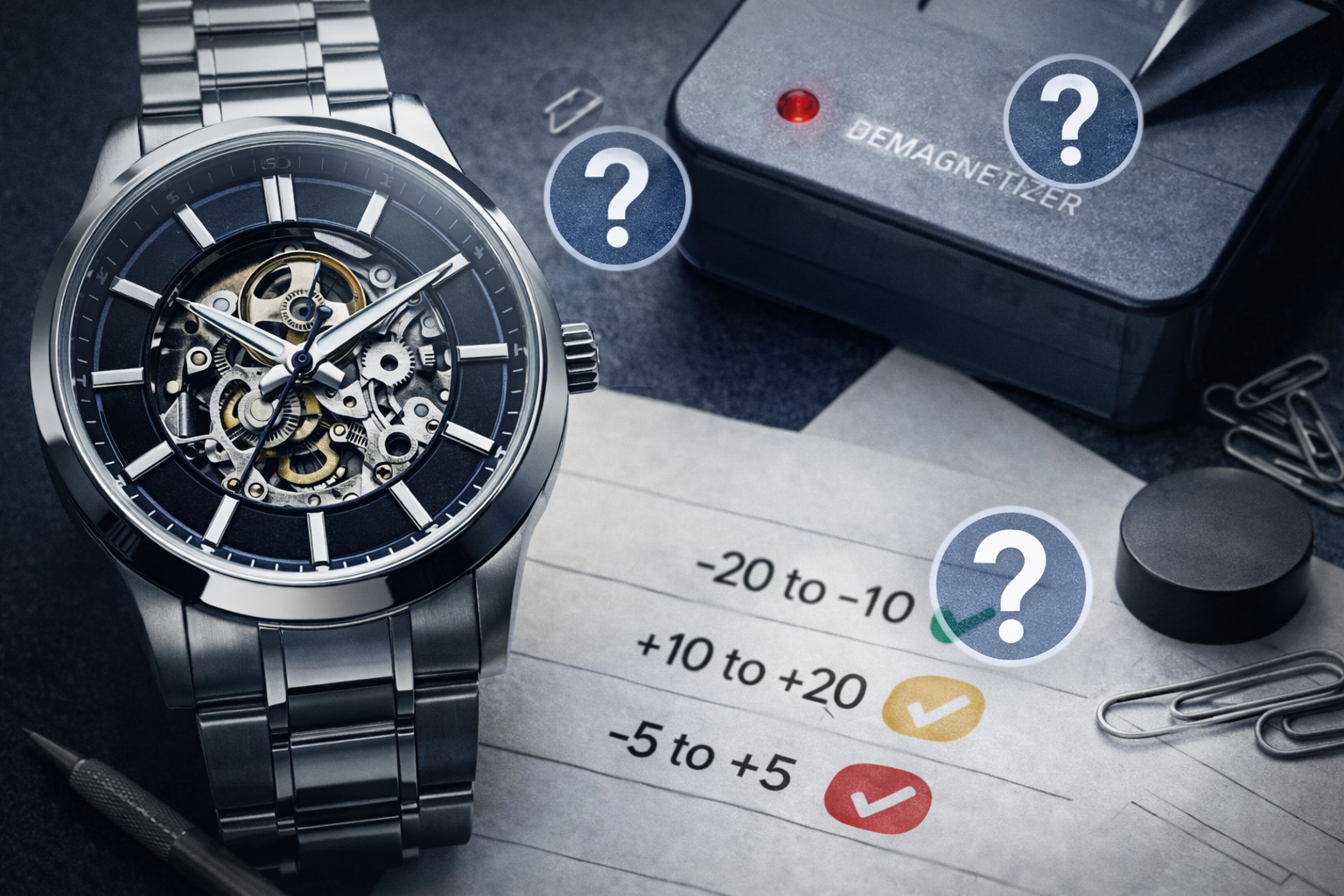
Most modern automatic watches run within about -20 to +20 seconds per day in normal daily use. Many quality movements do better—often -10 to +10 seconds/day—especially when properly regulated and consistently worn.
If you’re comparing accuracy and convenience with a battery-powered option, read: Automatic Watch vs Quartz: Differences, Pros & Which to Choose
https://www.globalwatchfair.com/blogs/Automatic-Watch-vs-Quartz:-Differences,-Pros-Which-to-Choose
What “Accuracy” Means (Seconds Per Day)
Mechanical watch accuracy is usually expressed as seconds gained/lost per day (s/day).
-
+8 s/day = the watch gains 8 seconds each day
-
-12 s/day = the watch loses 12 seconds each day
A small daily deviation becomes noticeable over a week, which is why tracking your typical rate matters more than obsessing over a single day.
Typical Accuracy Ranges in Real Life
Here’s a practical way to think about it:
| Watch Type | Common Real-World Range | What It Means |
|---|---|---|
| Entry-level automatic | -20 to +20 s/day | Normal for many starter movements |
| Mid-range automatic | -10 to +10 s/day | Very common with modern calibers |
| Well-regulated / premium | -5 to +5 s/day (often achievable) | Depends on wear + condition |
| Quartz | Usually far tighter | “Set-and-forget” convenience |
Note: published specifications and certifications are lab targets—your wrist introduces variables that can shift results.
Why Automatic Watches Drift: The 9 Biggest Factors
1) Position (dial up / crown down / etc.)
Mechanical movements can run differently depending on orientation. That’s normal and can be used to your advantage (more on that below).
2) Power reserve level
Many watches keep time best when they’re not running near empty. If your watch frequently stops overnight, accuracy can look worse.
3) Magnetism (common and overlooked)
Magnets from bag clasps, speakers, tablets, and some desk items can magnetize components and cause sudden changes—often the watch starts running fast.
4) Shock and vibration
A strong impact can shift regulation or affect delicate parts.
5) Temperature swings
Mechanical parts expand/contract slightly with temperature changes.
6) Movement quality and regulation
Two watches using similar base movements may perform differently depending on factory regulation.
7) Age of lubrication (service history)
Old oils increase friction and reduce stability.
8) Wear pattern
Active days vs desk days change how consistently the watch stays wound.
9) How the watch fits on your wrist
Even fit can affect positional behavior over time.
If you want the simple “what’s happening inside” explanation, read: How Does an Automatic Watch Work? Simple Beginner Guide
https://www.globalwatchfair.com/blogs/How-Does-an-Automatic-Watch-Work-Simple-Beginner-Guide-Meta-Description(≤155)
How to Measure Your Watch’s Accuracy (Simple, Reliable Method)
You don’t need special tools.
-
Fully wind the watch (or wear it actively for a day)
-
Set the time using a reliable reference (phone time)
-
After 24 hours, compare the difference in seconds
-
Repeat for 3–7 days and take the average
Example tracking:
-
Day 1: +6s
-
Day 2: +5s
-
Day 3: +7s
Average: +6 s/day
This average is far more useful than a single measurement.
How to Improve Accuracy (Practical Tips That Actually Work)
1) Keep it consistently wound
If you rotate watches, accuracy can look worse simply because the watch spends too much time at low power.
2) Use “overnight positional correction”
This is a low-effort trick that works because of positional variance.
-
If your watch runs fast, try placing it overnight in a position that slows it down
-
If it runs slow, try a position that speeds it up
Common starting tests:
-
Dial up
-
Dial down
-
Crown down (on its side)
Track 2–3 nights and keep the best position.
3) Reduce magnet exposure
Avoid leaving the watch on:
-
magnetic clasps
-
speaker bases
-
tablet/phone magnetic covers
-
charging pads with magnets
4) Demagnetize if the change is sudden
If a watch suddenly starts gaining a lot (e.g., +30s/day, +60s/day), magnetism is a frequent cause. A watchmaker can test and demagnetize quickly.
5) Maintain and service at reasonable intervals
A watch can be “accurate” today and drift months later if lubrication ages or wear increases.
For a practical care routine, read: How to Maintain an Automatic Watch: Daily Wear, Storage & Servicing
https://www.globalwatchfair.com/blogs/How-to-Maintain-an-Automatic-Watch:-Daily-Wear,-Storage-Servicing
When Inaccuracy Is a Real Problem
Consider a check-up if you notice:
-
A sudden big change (e.g., goes from +5 to +45 s/day)
-
Highly unstable timing (fast one day, slow the next)
-
The watch stops even with normal daily wear
-
Other symptoms (rough crown feel, unusual rotor noise, etc.)
FAQ: Automatic Watch Accuracy
Are automatic watches accurate enough for everyday use?
Yes. Most modern automatics are accurate enough for daily wear, with occasional time-setting depending on deviation.
What’s a “good” accuracy for an automatic watch?
Many owners are happy with within ±10 seconds/day. Better is possible with good regulation and care.
Why does my automatic watch gain time?
Magnetism is a common reason, especially if the change happens suddenly. Positional variance and regulation can also cause consistent gain.
Do automatic watches become more accurate over time?
Some stabilize after a short break-in, but they can also worsen if lubrication ages or magnetism occurs.
Should I choose quartz if I want perfect accuracy?
If your #1 priority is set-and-forget precision, quartz usually wins. If you want craftsmanship and mechanical feel, automatic is the appeal.
Compare both here: Automatic Watch vs Quartz: Differences, Pros & Which to Choose
https://www.globalwatchfair.com/blogs/Automatic-Watch-vs-Quartz:-Differences,-Pros-Which-to-Choose
Recommended reading
-
What Is an Automatic Watch? Pros, Cons & Who Should Buy One
https://www.globalwatchfair.com/blogs/What-Is-an-Automatic-Watch-Pros,-Cons-Who-Should-Buy-One -
How Does an Automatic Watch Work? Simple Beginner Guide
https://www.globalwatchfair.com/blogs/How-Does-an-Automatic-Watch-Work-Simple-Beginner-Guide-Meta-Description(≤155) -
How to Maintain an Automatic Watch: Daily Wear, Storage & Servicing
https://www.globalwatchfair.com/blogs/How-to-Maintain-an-Automatic-Watch:-Daily-Wear,-Storage-Servicing -
Automatic Watch vs Quartz: Differences, Pros & Which to Choose
https://www.globalwatchfair.com/blogs/Automatic-Watch-vs-Quartz:-Differences,-Pros-Which-to-Choose