Automatic Watch vs Quartz: Differences, Pros & Which to Choose
Introduction
If you’re shopping for a watch, one of the first questions you’ll face is this: automatic watch or quartz watch—which one is better?
Both types tell time, but they work in completely different ways and are designed for different kinds of wearers. In this guide, we’ll break down the real differences between automatic and quartz watches, explain the pros and cons of each, and help you decide which one fits your lifestyle best.
If you’re new to automatic watches, you may want to start with our full guide:
👉 What Is an Automatic Watch? Pros, Cons & Who Should Buy One
1. How Automatic Watches Work
An automatic watch is powered by mechanical movement. Instead of using a battery, it winds itself using the natural motion of your wrist.
Inside the watch, a small rotor spins as you move, storing energy in the mainspring. As long as you wear it regularly, the watch keeps running.
Key characteristics:
-
No battery required
-
Powered by wrist movement
-
Complex mechanical craftsmanship
-
Often features a sweeping second hand
2. How Quartz Watches Work
A quartz watch uses a battery and a quartz crystal to keep time. When electricity passes through the crystal, it vibrates at a precise frequency, ensuring excellent accuracy.
Quartz watches are simple, reliable, and extremely popular for everyday wear.
Key characteristics:
-
Battery-powered
-
Very accurate timekeeping
-
Low maintenance
-
Typically more affordable
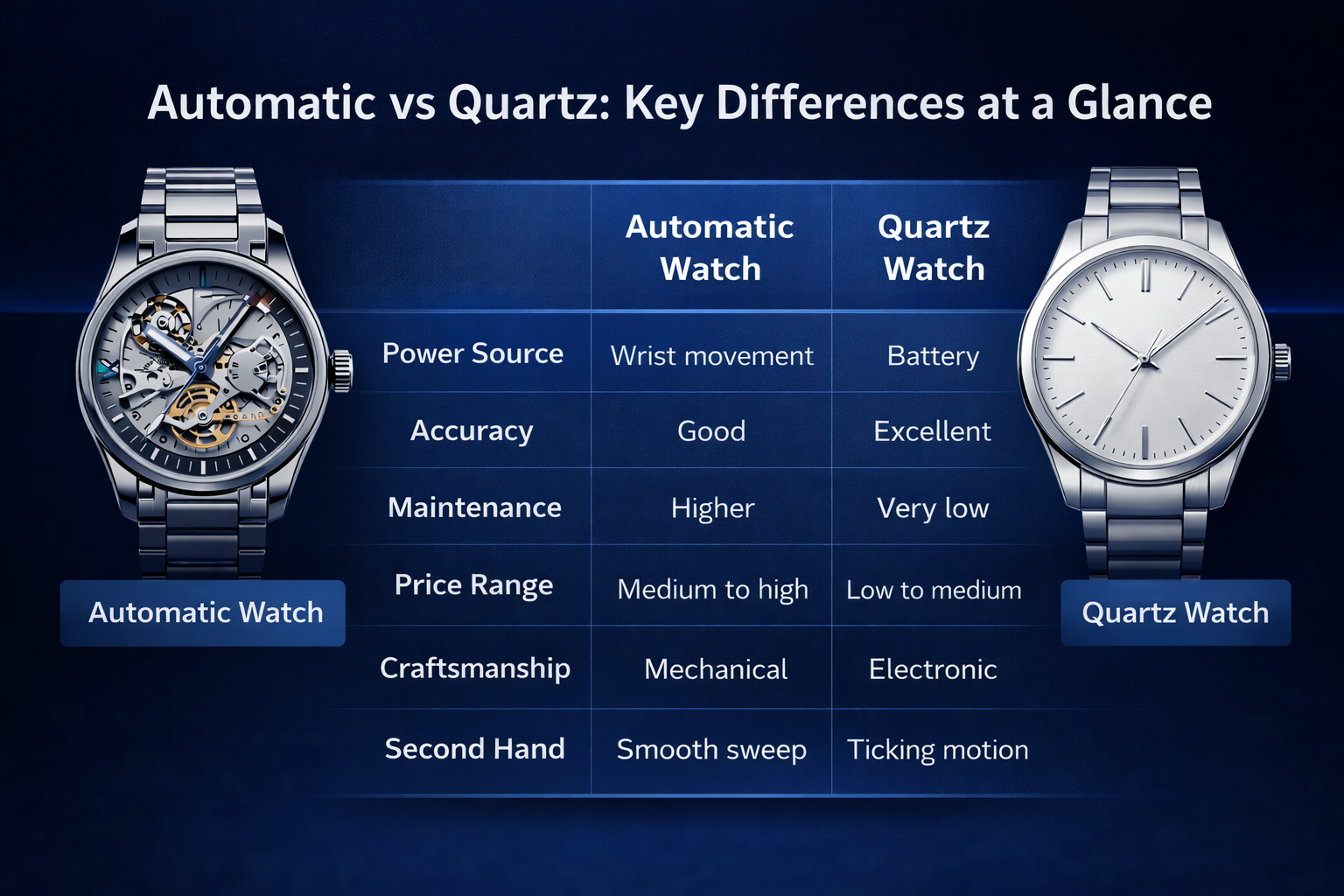
3. Automatic vs Quartz: Key Differences at a Glance
| Feature | Automatic Watch | Quartz Watch |
|---|---|---|
| Power Source | Wrist movement | Battery |
| Accuracy | Good | Excellent |
| Maintenance | Higher | Very low |
| Price Range | Medium to high | Low to medium |
| Craftsmanship | Mechanical | Electronic |
| Second Hand | Smooth sweep | Ticking motion |
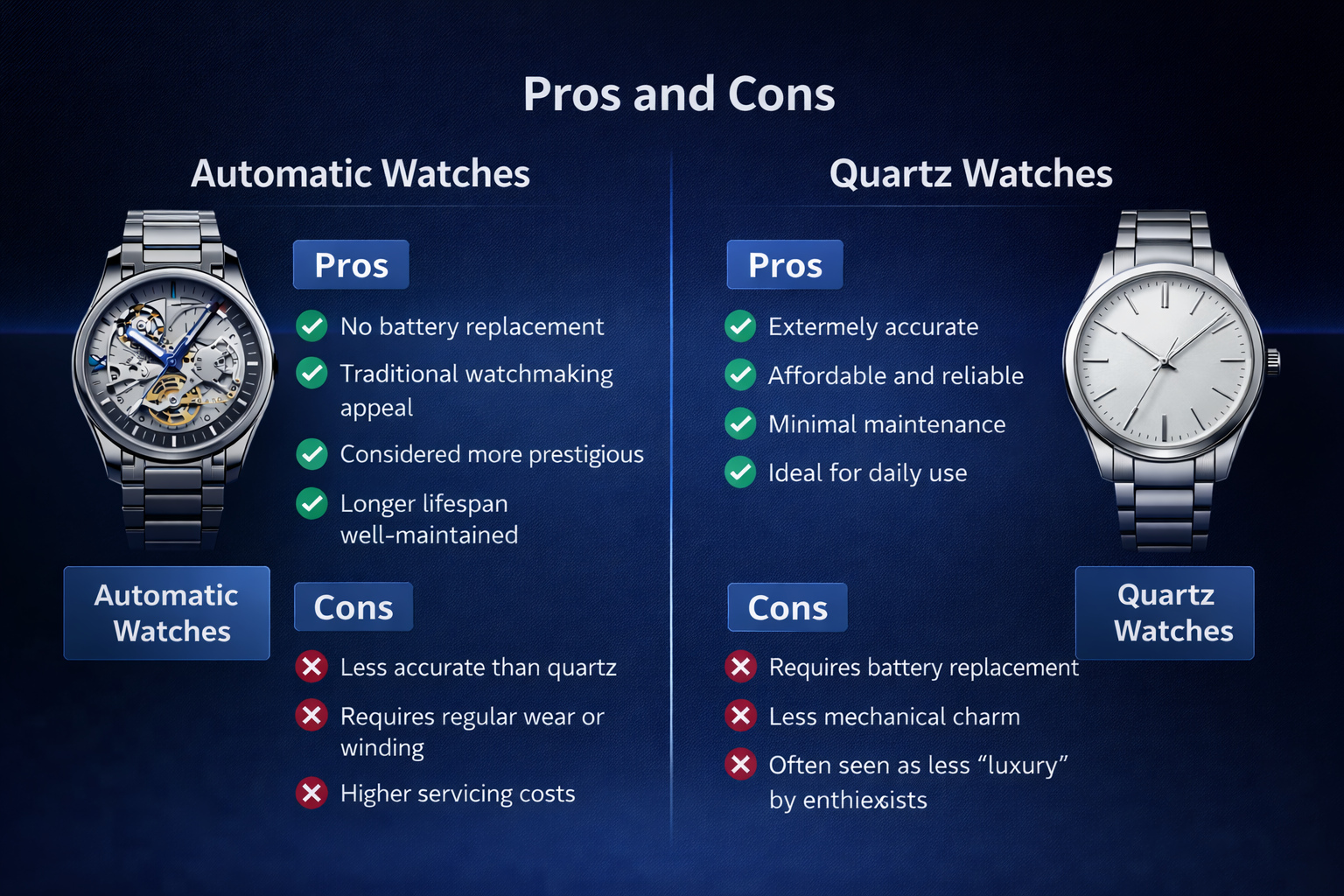
4. Pros and Cons of Automatic Watches
✅ Pros
-
No battery replacement
-
Traditional watchmaking appeal
-
Often considered more prestigious
-
Longer lifespan if maintained well
❌ Cons
-
Less accurate than quartz
-
Requires regular wear or winding
-
Higher servicing costs
-
Sensitive to shock and magnetism
5. Pros and Cons of Quartz Watches
✅ Pros
-
Extremely accurate
-
Affordable and reliable
-
Minimal maintenance
-
Ideal for daily use
❌ Cons
-
Requires battery replacement
-
Less mechanical charm
-
Often seen as less “luxury” by enthusiasts
 6. Which One Should You Choose?
Choose an automatic watch if you:
-
Appreciate craftsmanship and tradition
-
Enjoy mechanical engineering
-
Don’t mind regular wear or occasional winding
-
Want a watch with long-term collectible value
Choose a quartz watch if you:
-
Want maximum accuracy
-
Prefer low maintenance
-
Need a reliable daily watch
-
Are buying your first watch on a budget
7. Is One Better Than the Other?
There is no universally “better” option—only the right watch for your needs.
Many watch collectors own both:
-
Quartz for convenience
-
Automatic for passion and enjoyment
If you’re still deciding, learning how automatic watches work in detail can help clarify your preference.
Final Thoughts
The debate between automatic watch vs quartz watch comes down to lifestyle, budget, and personal taste. Whether you value precision or tradition, both watch types have earned their place in the watch world.
👉 Ready to dive deeper?
Check out our beginner-friendly guide on automatic watches to see if they’re right for you.